
Last updated: October 1, 2026
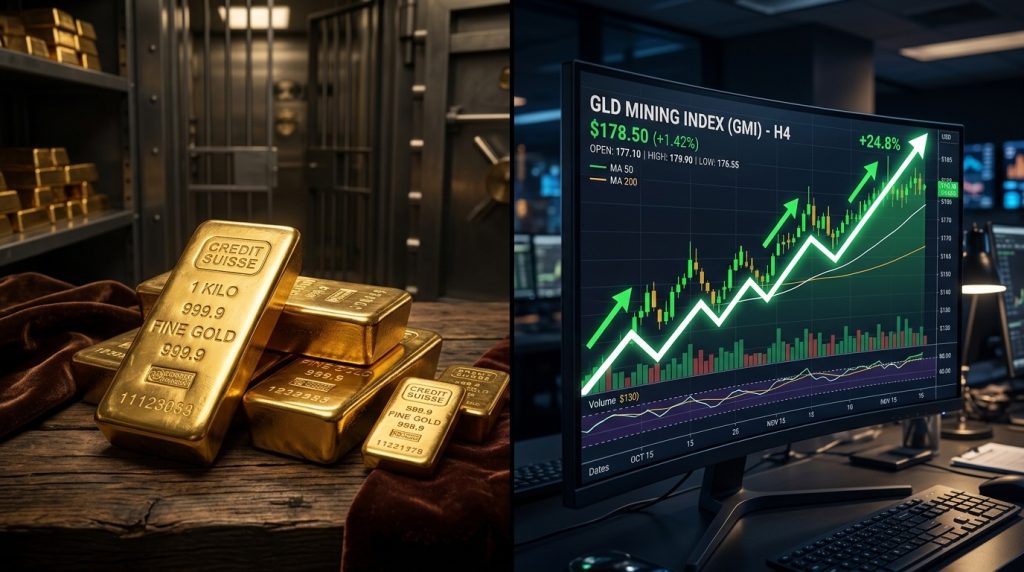
You believe in gold, but should you own physical bars or buy mining stocks? Both give you exposure to gold prices, but they behave very differently. Here’s how to choose between them — or build a portfolio that includes both.
Quick Comparison
| Feature | Physical Gold | Mining Stocks |
|---|---|---|
| Volatility | Low (15%) | High (40%+) |
| Leverage to gold price | 1:1 | 2x to 3x |
| Dividends | None | 1–4% yield |
| Storage cost | Yes | None |
| Liquidity | Medium | High |
| Counterparty risk | None | Yes |
| Tax rate (long-term) | 28% max | 20% max |
Why Physical Gold
Physical gold — coins and bars — is the purest form of gold ownership. There’s no intermediary, no balance sheet risk, and no possibility of bankruptcy. When the financial system stresses, physical gold tends to outperform almost everything else.
Best for: Long-term wealth preservation, inflation hedging, portfolio insurance, and investors who want zero counterparty risk.
Drawbacks: No income (gold doesn’t pay dividends), storage costs, slower to sell than stocks, and dealer markups of 3–8% above spot price.
Why Mining Stocks
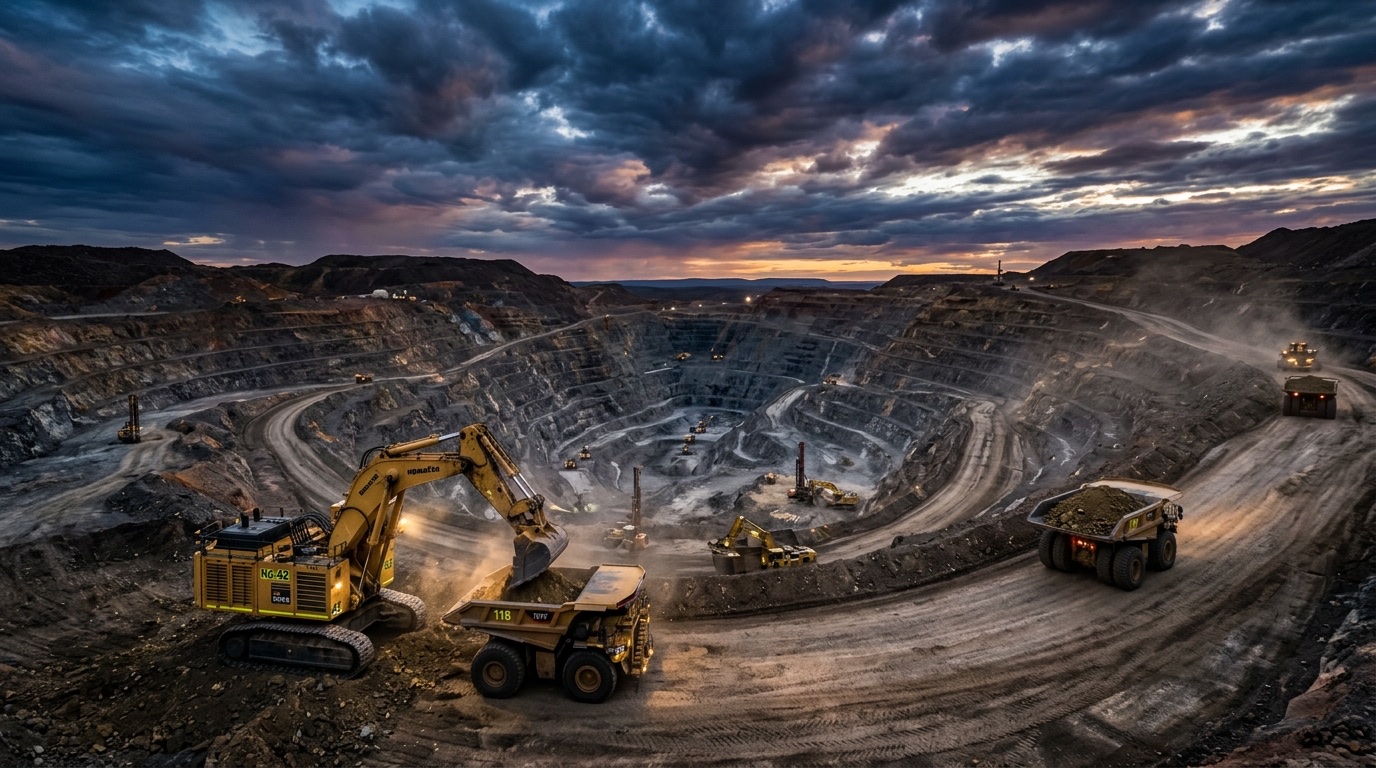
Gold mining stocks are leveraged plays on the gold price. When gold rises 10%, well-run miners often gain 20–30% because their fixed costs stay flat while revenue scales with gold prices. They also pay dividends and trade with stock-like liquidity.
Best for: Investors comfortable with volatility who want amplified returns from a gold bull market and prefer assets that generate income.
Drawbacks: Mining stocks carry company-specific risks (management, debt, mine accidents, country risk) that physical gold doesn’t have. They can also fall when the broader stock market crashes — even if gold itself is rising.
The Leverage Effect
Here’s why mining stocks attract speculators. Imagine a miner with all-in costs of $1,200/oz when gold is at $2,000:
- Profit margin per ounce: $800
- Gold rises 10% to $2,200
- New profit per ounce: $1,000 (a 25% jump)
The miner’s earnings grew 2.5x faster than the gold price. But this works in reverse too — a 10% drop in gold can wipe out most of the miner’s profit and crash the stock 30% or more.
Top Gold Mining Stocks in 2026
- Newmont (NEM): World’s largest gold producer, low debt, 3% dividend
- Barrick Gold (GOLD): Diversified across the Americas and Africa, 2% dividend
- Agnico Eagle (AEM): High-grade Canadian mines, strong balance sheet
- Franco-Nevada (FNV): Royalty company — owns gold streams without operating mines (lower risk)
- Wheaton Precious Metals (WPM): Another royalty/streaming play with 1% dividend
For diversified exposure, the VanEck Gold Miners ETF (GDX) holds the largest miners, while GDXJ tracks junior miners with higher risk and higher upside.
How They Performed
Over the past 25 years, physical gold has delivered an average return of 8% annually with a max drawdown of -33%. The GDX gold miners ETF has averaged 5% annually with a max drawdown of -67%. Miners offer the potential for outperformance during gold bull markets but have significantly higher downside.
The Right Mix
Most gold investors should own both. A common allocation:
- 70% physical gold for stability and wealth preservation
- 20% senior miners (Newmont, Barrick, Agnico) for dividend income
- 10% royalty companies (Franco-Nevada, Wheaton) for safer leverage
Avoid going all-in on junior miners or exploration companies unless you can afford to lose the entire position. Many never become profitable.
FAQ
Are gold mining stocks safer than physical gold?
No. Mining stocks are riskier because they add company, operational, and stock market risks on top of gold price exposure. Physical gold has zero counterparty risk.
Do gold mining stocks pay dividends?
Yes, most major miners pay dividends ranging from 1% to 4% annually. Newmont and Barrick are among the highest-yielding gold stocks.
Can I hold gold mining stocks in a Gold IRA?
No. Gold IRAs only allow IRS-approved physical gold, silver, platinum, and palladium. To hold mining stocks tax-advantaged, use a regular Traditional or Roth IRA — not a self-directed Gold IRA.
Which gives better returns over 10 years?
It depends on the gold price trend. In strong bull markets, miners typically outperform 2–3x. In flat or bearish markets, physical gold wins because miners drop sharply when costs eat into shrinking margins.