
Last updated: October 22, 2026
By Best Top 10 Gold Investments
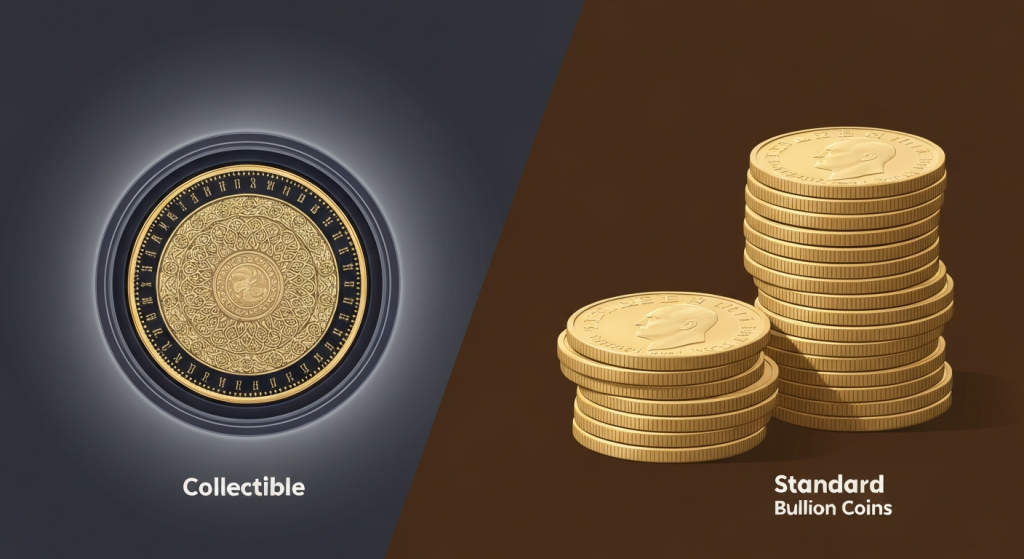
Bullion coins are bought primarily for their precious-metal content. Numismatic coins are collected for characteristics such as rarity, condition and historical interest. A collectible can contain valuable gold too, but its asking price needs more explanation than weight alone. Before choosing, decide whether you want metal exposure, a particular collectible, or both.
There is no single premium range that makes every bullion or collectible coin a fair purchase. Compare an identifiable coin, a complete price and a realistic route to selling it.
Start by identifying what you are buying
The U.S. Mint distinguishes investment bullion from collectible issues. Bullion is valued primarily for its metal weight; collectibles can attract interest because of factors such as condition and limited mintage. “Proof” describes a specialized production process. It does not, on its own, establish a resale premium or future return.
| Your intended purchase | Evidence to request | Useful comparison |
|---|---|---|
| Bullion for metal exposure | Exact product, fine-metal content, quantity, condition and total delivered price. | Quotes for the same product and a current cash buyback quote. |
| A collectible coin | Issue, year, mint, variety, condition or grade, and any certification details. | Comparable completed sales and a quote from a buyer who handles that issue. |
| A proof or special-edition coin | What makes this particular issue collectible, including packaging or certificate requirements. | Evidence for that issue, rather than a general claim about proof coins. |
Write those details on your comparison sheet before discussing an alternative product. A quote for a different year, grade, size or presentation may not answer whether the original offer is competitive.
Separate metal value from the asking price
Use fine-metal content, rather than the coin’s gross weight, to calculate a metal-value reference:
Fine troy ounces × the stated spot-price reference = metal-value reference.
Then record the quote’s time, currency, payment method, delivery charge and other applicable costs. The difference between the coin price and its metal-value reference is a starting point for analysis; it is not automatically the amount you could recover by selling.
Illustrative calculation, not a market quote: suppose a coin contains one fine troy ounce, the chosen gold-price reference is $3,000, and its quoted price is $3,180 before any additional costs. The $180 difference is 6% of the metal-value reference. If a dealer offers $2,960 to buy the same coin at that moment, the purchase-to-resale gap is $220, before other costs. The 6% calculation alone does not describe that gap.
The CFTC and FINRA metals checklist recommends checking written charges and asking for a current buyback price. It also warns that “semi-numismatic” has no special meaning. Ask what specific evidence supports the additional price.
Check the evidence behind a collector premium
For a collectible, build a small comparison file. Record the exact issue and look for completed sales with a matching grade and relevant characteristics. Note the sale date and whether the published amount includes the buyer’s fee. An advertised asking price is not evidence that a buyer paid it.
Where comparisons differ, write down the difference rather than averaging unlike coins. A cleaned or damaged coin, a different variety, or missing original packaging may not be comparable to the offer in front of you. If you cannot explain the premium using information beyond the seller’s pitch, pause and seek an independent assessment from someone familiar with that coin type.
For an NGC-certified coin, its certification lookup lets you compare the recorded description and grade and, where available, images. NGC’s security guidance also addresses counterfeit or tampered holders. Compare the actual coin, label and holder with the available record; refer discrepancies to the grading service before relying on the certificate.
Agree on purchase and resale terms
Ask for the return policy before committing: the deadline, any excluded products, restocking or market-loss charges, and who pays shipping. Check when a price becomes binding and what happens if the delivered coin differs from the invoice.
For resale, ask which buyers would consider the specific coin and how they would price it. Request a written bid when possible, and distinguish an actual offer from an estimated value. Keep the invoice, product description, photographs and certification details together.
Check IRA eligibility separately
Collectibility is not an IRA eligibility test. The IRS IRA FAQ lists coins and metals among collectibles, with exceptions for certain coins and bullion. Confirm the exact product and custody arrangement before purchasing through an IRA; a marketing label is insufficient.
Use our gold coin comparison guide for product-selection questions, the IRA custodian checklist for account paperwork, and our gold scam checks when an offer relies on urgency or unsupported promises.